
Last updated November 17, 2026
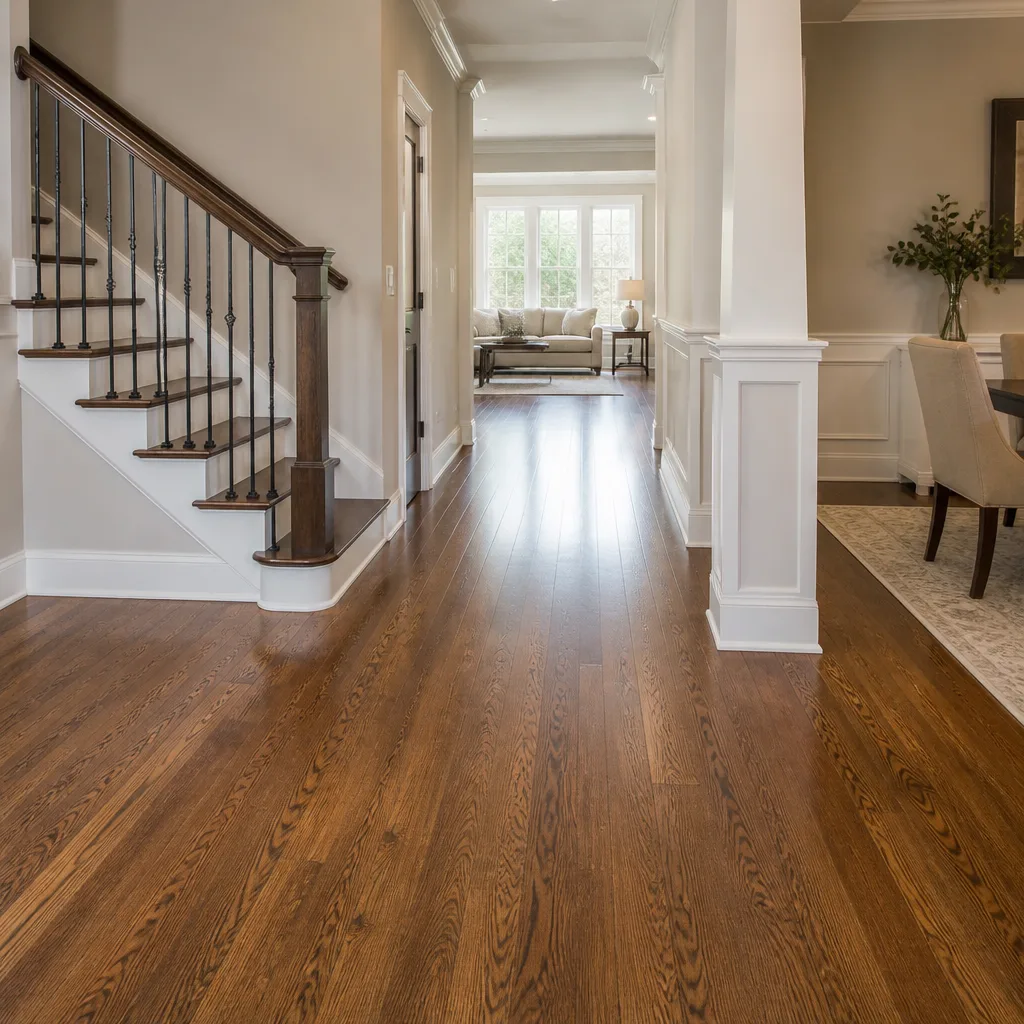 Hardwood
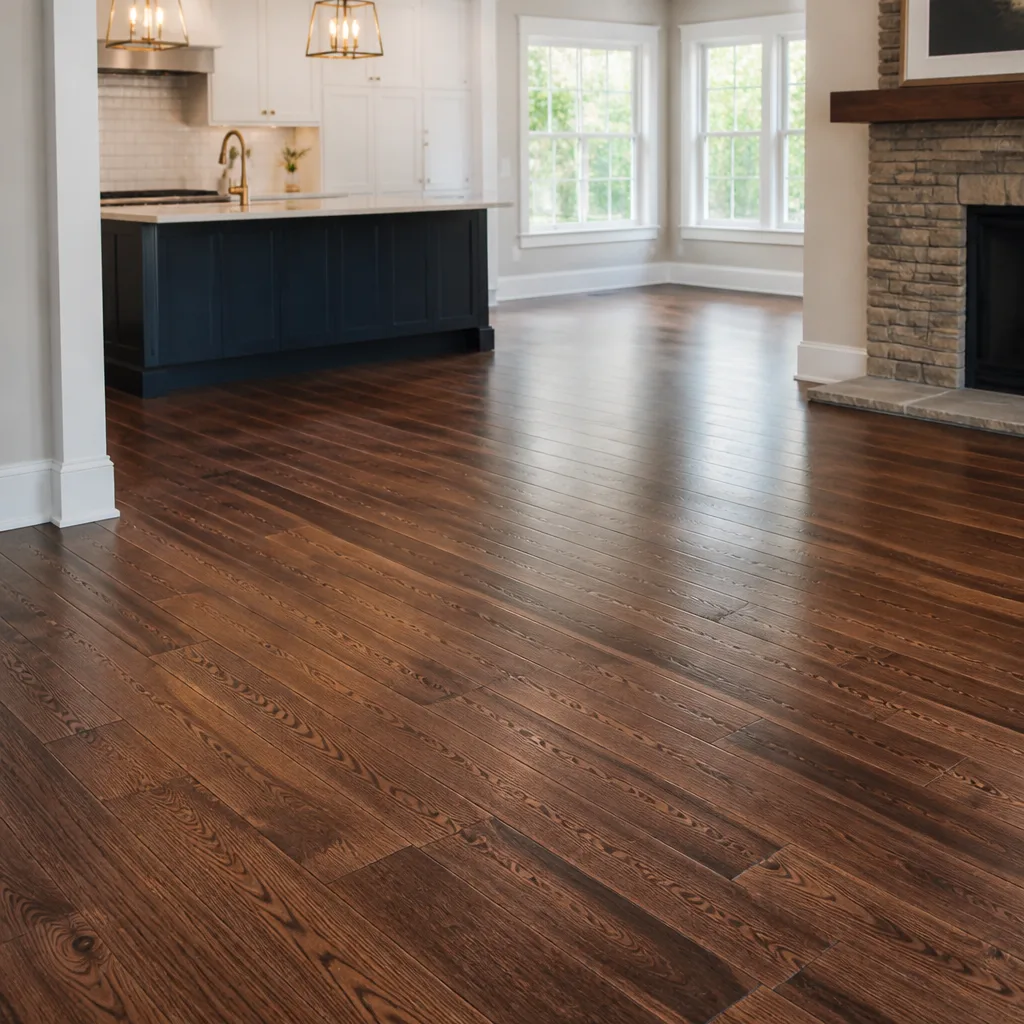 Engineered hardwood
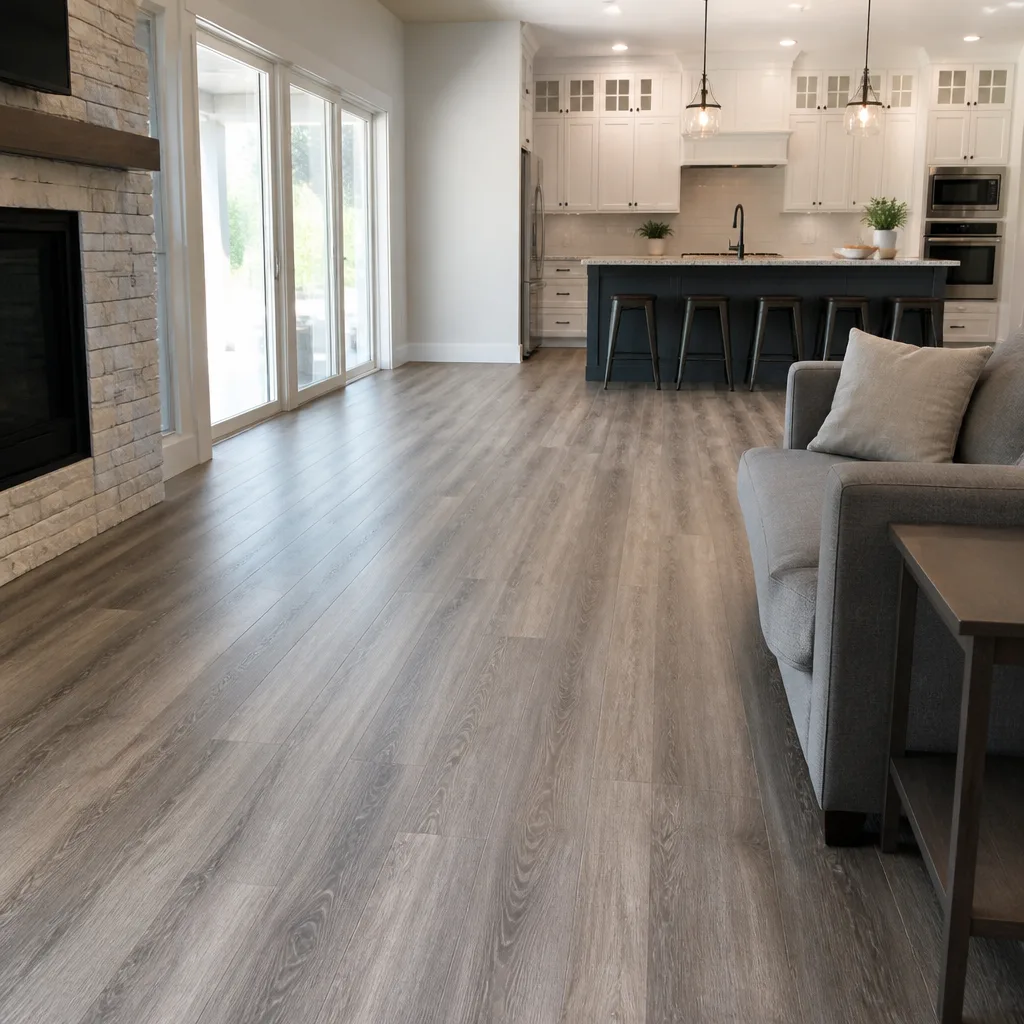 Luxury vinyl plank
 Laminate
 Porcelain tile
 Carpet
 Shaw
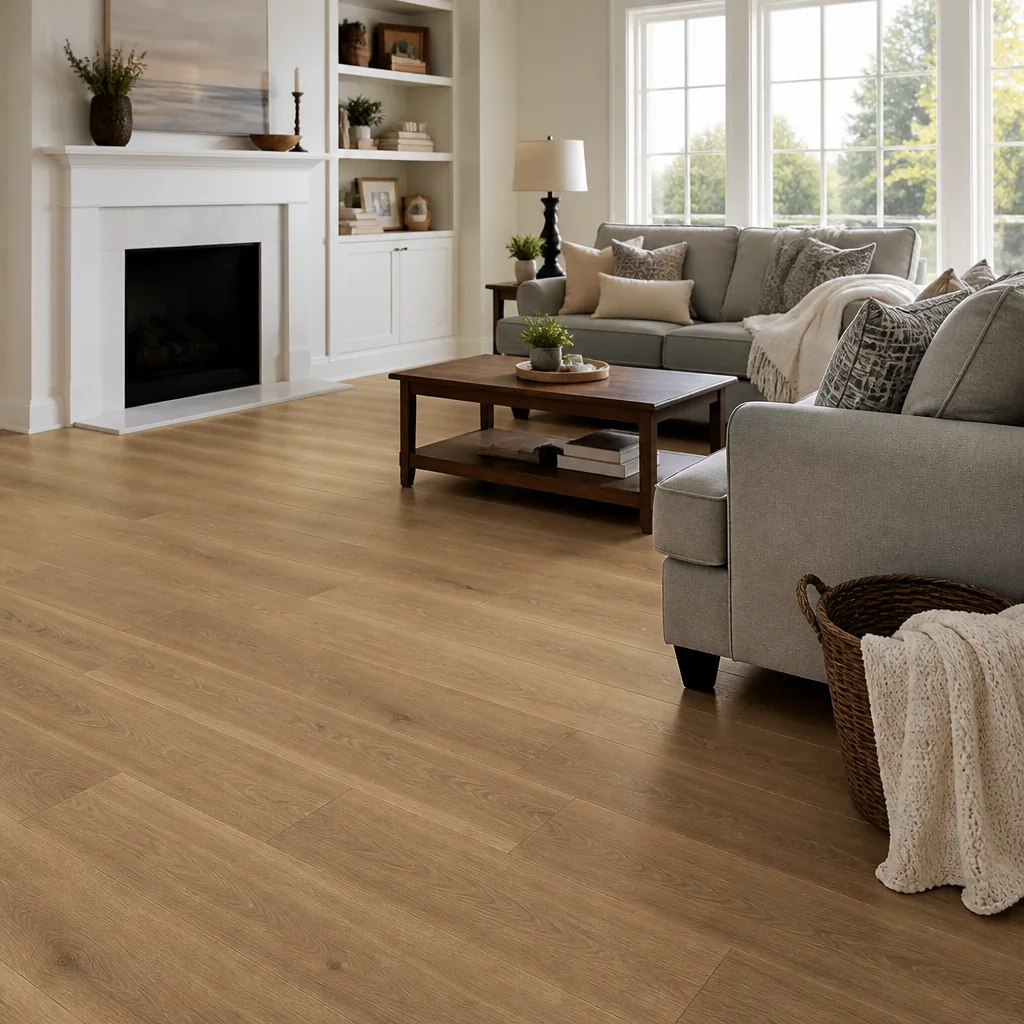 Mohawk
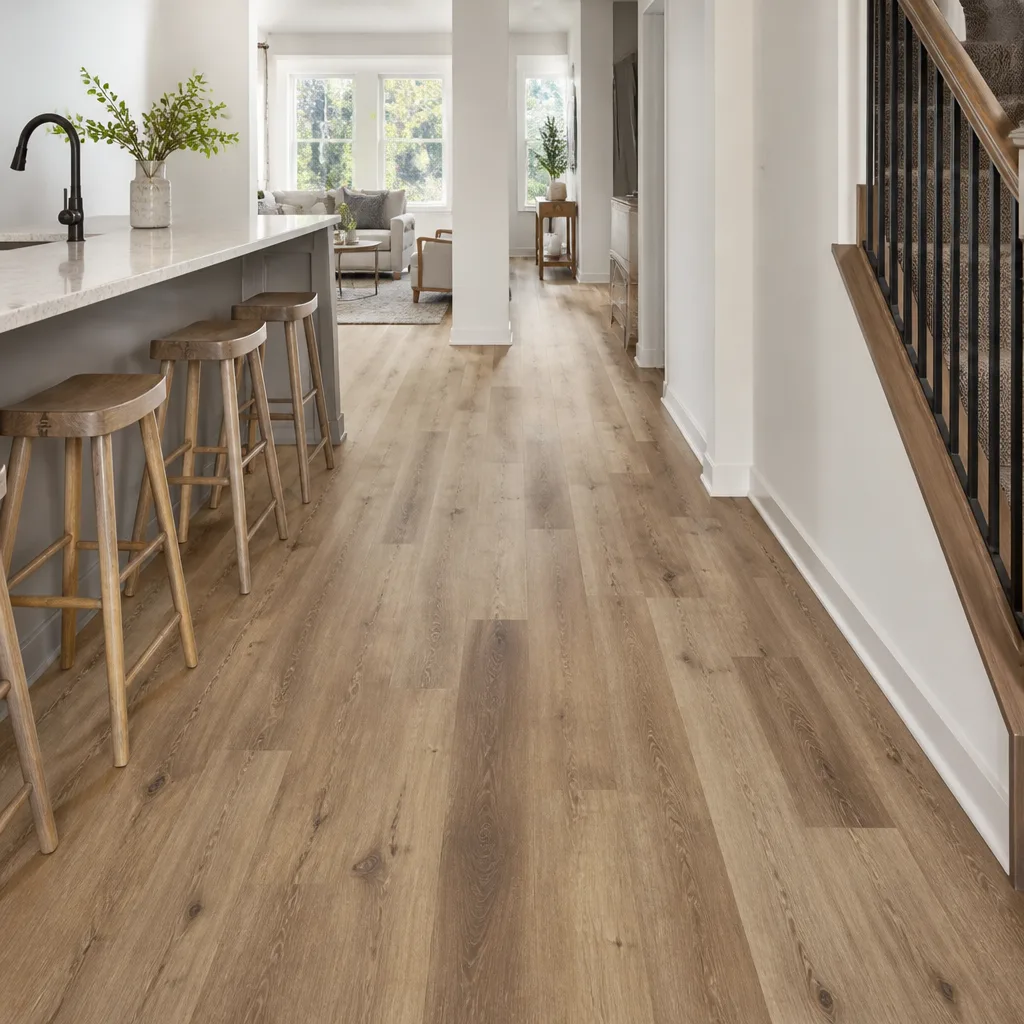 COREtec
 Pergo
Free in-home measure and written estimate: Shaw, Mohawk, COREtec and Pergo lines compared on your own rooms, with carpet, tile, vinyl plank, laminate and hardwood laid out side by side
Get your free estimateFix It or Start Over: Flooring Repair vs Replacement
Most homeowners decide whether to repair or replace a floor based on how bad the damage looks. That’s the wrong starting point. A repair quote for a 300-square-foot patch on a floor with an underlying moisture problem will usually fail again within 18 months, and after the second bill the homeowner has spent more than a replacement would have cost on day one. The severity of the surface damage tells you very little. What actually matters is whether the damage is isolated or systemic, how much usable life your current floor has left, and whether a repair will outlast the floor around it. This guide walks through how to tell those apart, where the cost crossover sits, and the specific jobs we see in Whitney where repair is clearly the smarter call.
Quick Answer
Repair a floor when the damage is isolated, the material has usable life left, and the repair cost comes in comfortably below replacement. Replace it when the damage points to a systemic problem (subfloor moisture, failed adhesive, settlement), when the floor is near the end of its service life anyway, or when a repair quote approaches 40-60% of what replacement would cost. The right answer almost always comes down to remaining floor life and root cause, not the size of the visible damage.
Styles & brands we work with
- Hardwood
- Engineered hardwood
- Luxury vinyl plank
- Laminate
- Porcelain tile
- Carpet
- Shaw
- Mohawk
- COREtec
- Pergo
Table of Contents
- Isolated Damage vs. Systemic Damage: How to Tell the Difference
- The Sanding Life Threshold: Is There Enough Hardwood Left to Refinish?
- Why Matching Existing Flooring for a Repair Is Harder Than It Looks
- The Cost Crossover Point: When Repair Stops Making Sense
- Repair Scenarios Where Fixing Is Clearly Correct
- Replacement Scenarios Where Patching Is a Short-Term Fix
- A Five-Step Diagnostic to Run Before You Decide
- What Homeowners in Whitney Need to Know Before Booking Either Job
Isolated Damage vs. Systemic Damage: How to Tell the Difference
Every repair-or-replace decision starts with one question: what caused this? An isolated problem lives in one place and stays there. A systemic problem runs through the whole floor or the substrate beneath it, and patching the visible damage won’t touch it.
Isolated damage has a clear cause and a clear boundary. A pet stain in one corner. A dropped tool that chipped a tile. A single board that cracked because a heavy appliance sat on it. A scratch from furniture dragged across a hallway. The rest of the floor looks and behaves fine, and the damage stops where the cause stopped.
Systemic damage is different. It shows up in patterns: cupping or crowning across an entire room, tile cracks that move along a grout line, boards that lift at the seams, a soft spot that keeps getting bigger, adhesive that dries out and lets the flooring shift. In our experience, these are the repairs that come back. The visible symptom gets patched while the moisture, the failed adhesive, or the settled subfloor keeps working underneath it.
The distinction matters most with water. A localized spill that soaked into a carpet pad in one room is isolated – pull the affected carpet, replace the pad, done. Water that has wicked across a hardwood floor from a slow leak under a dishwasher, or that has been weeping up through a slab, is systemic. Patching the boards you can see does nothing to the source.
One more distinction worth knowing: settlement. Floors over a framed subfloor in Whitney’s newer construction behave differently from floors on a slab. Slab floors have none of the bounce that framed floors do, but moisture from below has nowhere to go, and moisture from below is the most common systemic cause we see in any floor covering.
The Sanding Life Threshold: Is There Enough Hardwood Left to Refinish?
If your floor is hardwood, sanding is the first question – not repair, not replacement, sanding. Before you price anything else, find out whether the floor has enough material left to sand. Every sanding pass takes a thin layer off the surface. Once the wear layer is gone, the boards can’t be sanded again without exposing the tongue-and-groove joints or the fasteners.
The check itself is not something homeowners can do safely or accurately from above. It requires pulling a floor register or a threshold transition, or looking at the floor from a basement or crawlspace below, to see how much wood sits above the tongue. A trained eye reads that in a few minutes. Guessing from the surface is how people end up paying for a sanding job that exposes board edges.
What you can do at home is gather the history:
- Has this floor been refinished before, and if so, how many times?
- Do the board edges feel slightly raised in high-traffic areas?
- Are there any soft spots or visible joint lines that suggest the surface has been thinned?
- Does the floor sit on a slab or over a framed subfloor?
If there’s enough wood left, refinishing is the smartest money in flooring – you restore the whole floor without removing anything, and the entire surface gets a consistent fresh finish. That’s one of the reasons we keep hardwood floor refinishing as a core service rather than treating it as an add-on. If the floor is too thin to sand, individual boards can sometimes be replaced, but at that point you’re looking at a partial rebuild rather than a refresh, and the math shifts toward replacement with a new hardwood or one of the resilient options from Shaw or Karndean.
One caution: never promise yourself that every hardwood floor is refinishable. Some are. Some aren’t. It depends on the thickness of the wood and the condition it’s in, and that has to be checked at the estimate visit before anyone quotes you a number.
Why Matching Existing Flooring for a Repair Is Harder Than It Looks
Homeowners often assume a repair is just a matter of buying “the same floor” and patching it in. In practice, matching existing flooring is one of the hardest parts of any repair job, and it’s the main reason some patches are obvious even when the workmanship is good.
Three things work against a clean match:
- Dye lots and shade variation. Carpet, luxury vinyl plank, laminate, and tile are produced in batches, and colors vary slightly from batch to batch. A plank made two years after yours may be the identical product line and still read a shade different under your lighting. Carpet is especially sensitive to this, which is why carpet repairs in a visible area need careful product sourcing.
- Discontinued SKUs. Flooring lines get retired. The product you chose is often not the product that’s still on the shelf, and that means hunting for a close match rather than an exact one.
- Finish sheen mismatch. Even a perfect color match can read wrong if the finish sheen doesn’t line up. A floor that’s been walked on for a decade has a different surface texture than a brand-new plank, and hardwood stains don’t always match a sample in the real light of your room.
This is why repair work is often a partial replacement job rather than a spot patch. The technician takes the replacement material from a low-visibility area – inside a closet, under a piece of furniture, along a wall – and uses the removed flooring to patch the visible damage, so the new material goes where nobody sees it. That’s a craft skill, and it’s one of the reasons we carry nine brands (Shaw, Mohawk, COREtec, Pergo, LifeProof, Mannington, Armstrong, Daltile, and Karndean) instead of a single line. More lines mean more chances to find a close match to what’s already on the floor.
The Cost Crossover Point: When Repair Stops Making Sense
Here’s the rule we use when advising homeowners: when a repair quote approaches about 40-60% of what a full replacement would cost, replacement usually delivers better long-term value. Not always – a 40% repair on a floor with ten good years left can be the right call. But as the repair price climbs into that zone, you’re paying most of the money for a fraction of the floor’s life.
The math is straightforward when you think about it as cost per year of remaining service:
- Low-cost repair, floor has years left: Repair wins. You keep the floor you already have and spend a small amount to extend it.
- High-cost repair, floor is near end of life: Replace. The repair is a bridge to a replacement you’ll pay for anyway.
- Moderate repair, mixed diagnosis: Depends on cause. If the underlying issue is fixed (say, a leak was repaired and the subfloor dried), repair can be very good value. If the cause is still live, repair is a placeholder.
What a real estimate covers: the material, the labor, the removal of damaged flooring, any subfloor work, and the finished appearance. Comparing a repair quote against “the price of new flooring” only makes sense when both are written out and cover the same scope. That’s one reason we give a written estimate per job for every Whitney customer, free, before any work begins – so you can see side by side what a repair actually costs versus a full replacement.
Rough percentage of replacement cost is useful as a first filter, not as a final number. Always get the written estimate.
Repair Scenarios Where Fixing Is Clearly Correct
Some repairs are obvious calls, and doing them is far smarter than replacing a floor that has plenty of life. Here are the cases where repair is almost always the right answer:
- Localized water damage. A single spill, a small leak that was caught quickly, a pet accident confined to one spot. Once the moisture is addressed, a patch of affected boards or a stint of carpet and pad replacement restores the area cleanly.
- Single board or tile failure. One cracked tile, one split plank, one damaged board. In a properly installed floor this is a spot fix, not a wholesale job.
- Surface-only scratches. Scratches that don’t penetrate the wear layer of a hardwood or luxury vinyl floor can often be addressed with a screen-and-coat touch-up or a targeted refinish, depending on the material.
- Pet stains in one area. A stain that has soaked into the carpet pad and not the subfloor is a carpet repair – pull the affected section, replace pad, re-stretch, done. Water-resistant lines like COREtec and LifeProof also make ongoing pet accidents less damaging on the floor itself.
- Cosmetic damage in a low-visibility spot. A damaged board inside a closet, behind a sofa, or along a wall can be replaced from a spare piece with no visible compromise to the room.
Notice what these have in common: each has a clear boundary and a cause that has stopped. That’s the pattern that makes a repair last. If any of them are true of your floor, repair is likely the right starting point, and in Whitney our estimate visit will confirm it before you commit to a bigger job.
Replacement Scenarios Where Patching Is a Short-Term Fix
The flip side: some damage looks repairable and isn’t, because the floor underneath is failing or the cause is still active. These are the scenarios where patching is a short-term fix on a long-term problem:
- Subfloor moisture. If you’re seeing cupping, crowning, or a musty smell that keeps returning, the moisture source beneath the floor hasn’t been solved. New boards will fail the same way.
- Failed adhesive. Floating floors and glued-down floors fail differently. Glue-down failures mean every plank is suspect, not just the ones that have lifted so far.
- Widespread settlement. A floor that has shifted across a whole room usually has a subfloor issue underneath. Fixing the visible flooring first doesn’t fix what’s moving it.
- End-of-life material. A worn carpet that has been through its usable cycle, hardwood that’s already been sanded to the limit, tile that’s cracking in multiple rooms. At this point, you’re not repairing a floor – you’re repairing a floor that won’t be there much longer.
- Repair cost near replacement cost. Same principle as the crossover point above. Once the repair approaches 40-60% of replacement, the economics favor a new floor.
- Matching is impossible and visible. Discontinued products, no close SKU, no salvageable donor material. In a highly visible room, a mismatched patch is often worse than a clean replacement.
In these cases, patching over the symptom is how homeowners end up paying twice. The first bill for a cosmetic repair, and the second for the replacement they needed all along.
A Five-Step Diagnostic to Run Before You Decide
Before you book anything, run these five checks. They’ll tell you whether you’re looking at a repair or a replacement, and they’ll make your estimate conversation much more productive.
- Bound the damage. Look for patterns. Is the problem in one spot, one room, or spread across multiple rooms? Damage that repeats in a pattern points to a systemic cause. Damage that stops where the cause stopped is isolated.
- Find the cause. Spill, leak, pet, dropped object, poor installation, moisture from below, or settling. If you can’t name the cause, that’s a sign the estimator needs to look before any quote is made.
- Check remaining life. For hardwood, whether it can be sanded again. For carpet, the age and condition of the pile. For tile, whether the failure is a single tile or consistent grout-line cracking across a floor.
- Test the match. Do you have spare material or careful knowledge of the exact SKU and dye lot? Does the room allow hidden donor material to be pulled for the patch? If no on both, expect to compromise on a visible match or lean toward replacement.
- Get a written estimate on both options. Repair and replacement, both priced, both in writing. That’s the only way to see the real crossover in your project rather than guessing.
A five-step diagnostic takes about twenty minutes on your own. If you want it checked by someone who does this every day, that’s what the free estimate visit is for – one of the three services we focus on in Whitney, along with carpet installation and tile flooring installation. If you’re looking at a hardwood floor, refinishing often enters the conversation early, and that decision alone can change the answer from replace to restore.
What Homeowners in Whitney Need to Know Before Booking Either Job
Whitney’s housing stock splits broadly into two groups, and the repair-vs-replace math changes with each. Newer homes on slabs are common, and slab moisture is quietly the biggest flooring factor here. Slab floors feel rock-solid underfoot, but moisture has nowhere to escape and often moves up into the flooring above. On wood, laminate, or carpet, that shows as cupping, rippling, and persistent smell – and it makes patching the visible symptom pointless unless the moisture source is addressed.
Older and framed-floor homes in Whitney behave differently. There’s some flex underfoot, and a plumbing leak can spread across a framed subfloor in ways a slab won’t allow. That’s where localized repair often works well, provided the leak has been fixed and the subfloor has had time to dry.
Product choice pulls in both directions, too. A luxury vinyl line like Flooring Whitney‘s Karndean offers a design-forward look with resilience that handles daily wear. For pet-heavy and moisture-prone rooms, LifeProof and COREtec are the brands we steer toward most, since water-resistant performance is a real differentiator for replacement math. For homeowners restoring hardwood, refinishing is often the best-value option in the house.
The technicians we connect homeowners with have up to 14 years of experience across carpet, tile, and hardwood. One trade, done right – that’s the position we take in Whitney, and it’s why the repair-or-replace call lands with someone who sees these decisions every week rather than a generalist who lists flooring as one of ten services. For a full look at the company, see Whitney.
Common Mistakes to Avoid
- Repairing the symptom without fixing the cause. A patched cupped board over an active moisture source will fail again. Find the cause first, fix it, then address the flooring.
- Assuming the worst-looking damage is the most expensive. A large surface scratch on hardwood can be far cheaper to fix than a small soft spot that turns out to be a subfloor issue. Look at cause, not size.
- Buying new material for a match before checking the old one. Dye lots and discontinued SKUs mean “the same product” often isn’t the same color. Test or salvage first.
- Refinishing hardwood that’s already been sanded to the limit. Some floors are simply too thin to sand again. Get it checked at the estimate, not after the sanding starts.
- Patching in a high-visibility room with a near-match. A visible mismatch in an entryway or living room often reads worse than a clean replacement in that room. Reserve near-matches for low-visibility areas.
- Comparing a repair quote to “the price of a floor.” Those rarely cover the same scope. Ask for both repair and replacement in writing, with removal, subfloor work, and finish included.
- Choosing replacement when refinishing would have solved it. On hardwood with enough material left, a full sand and refinish is often the best money in the house. Get that option priced before you buy a new floor.
See the difference
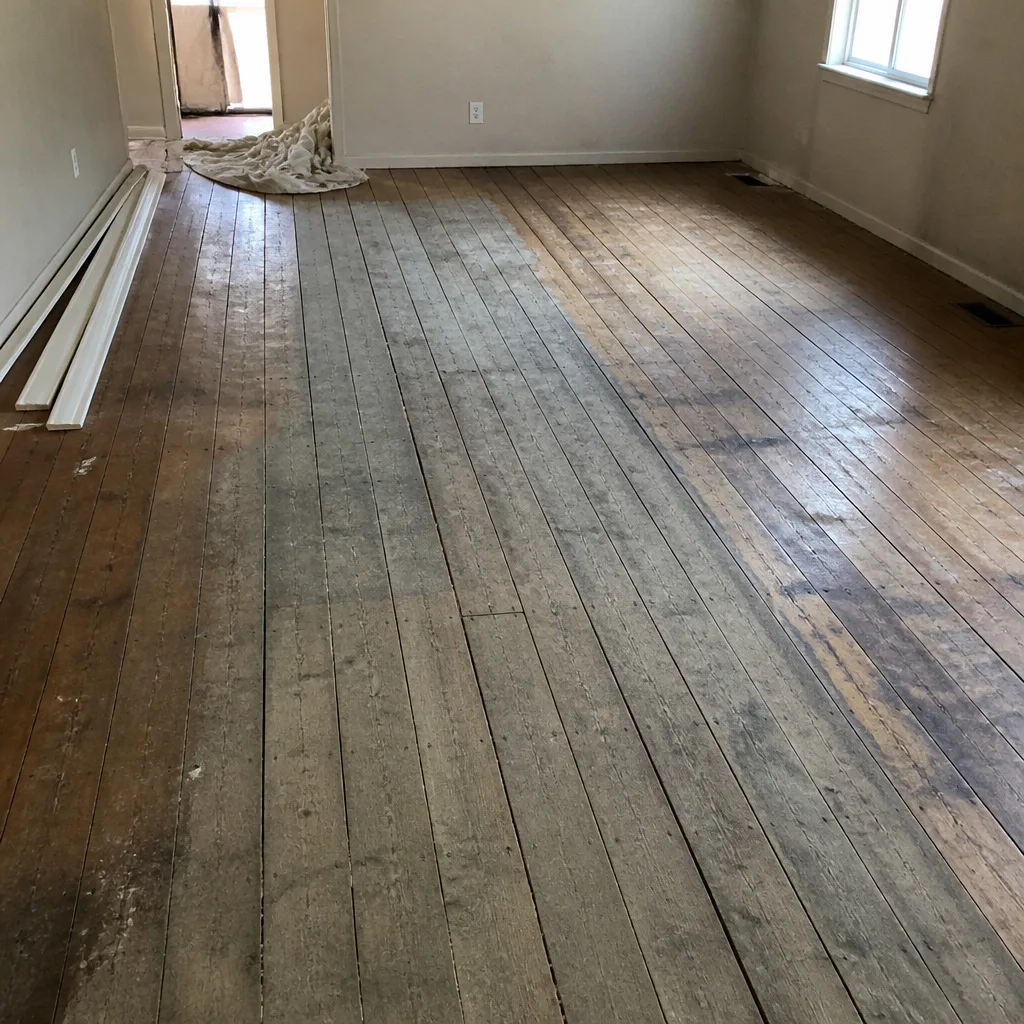 Before
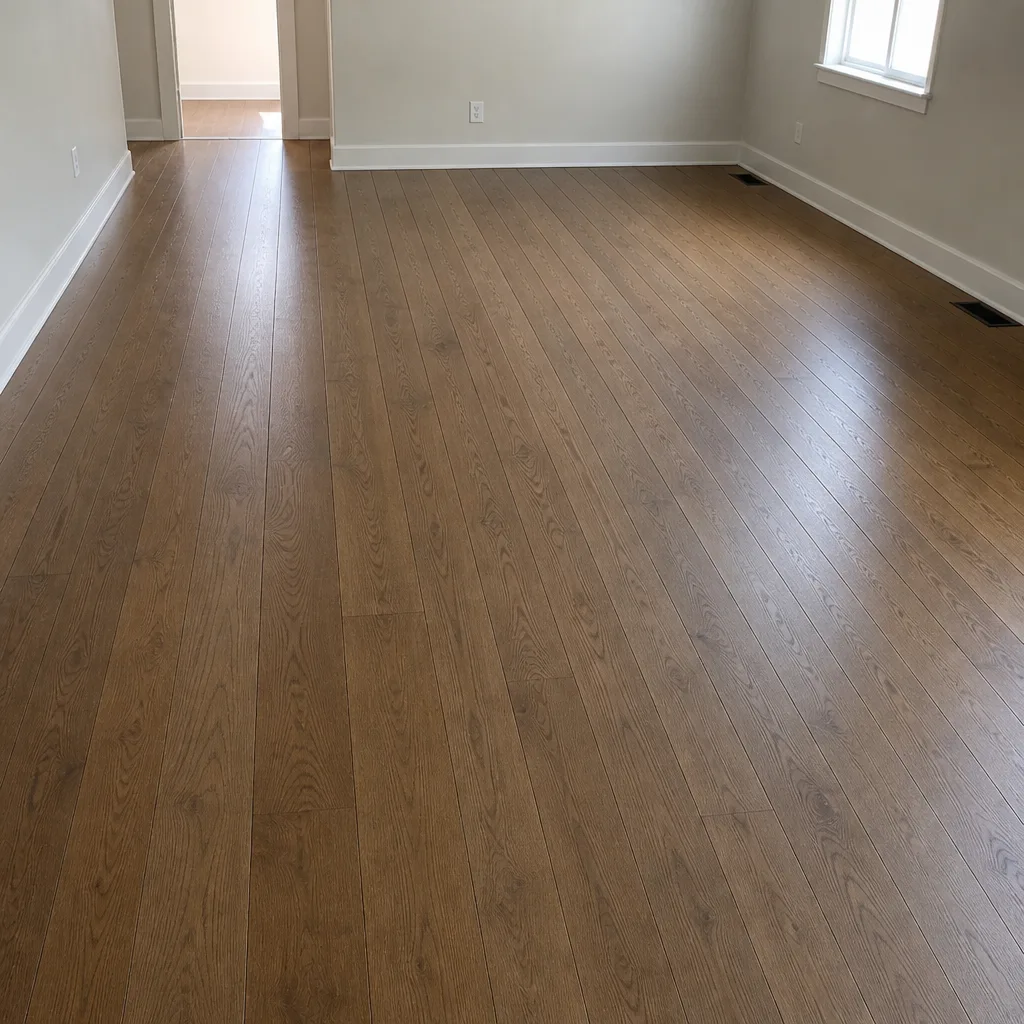 After
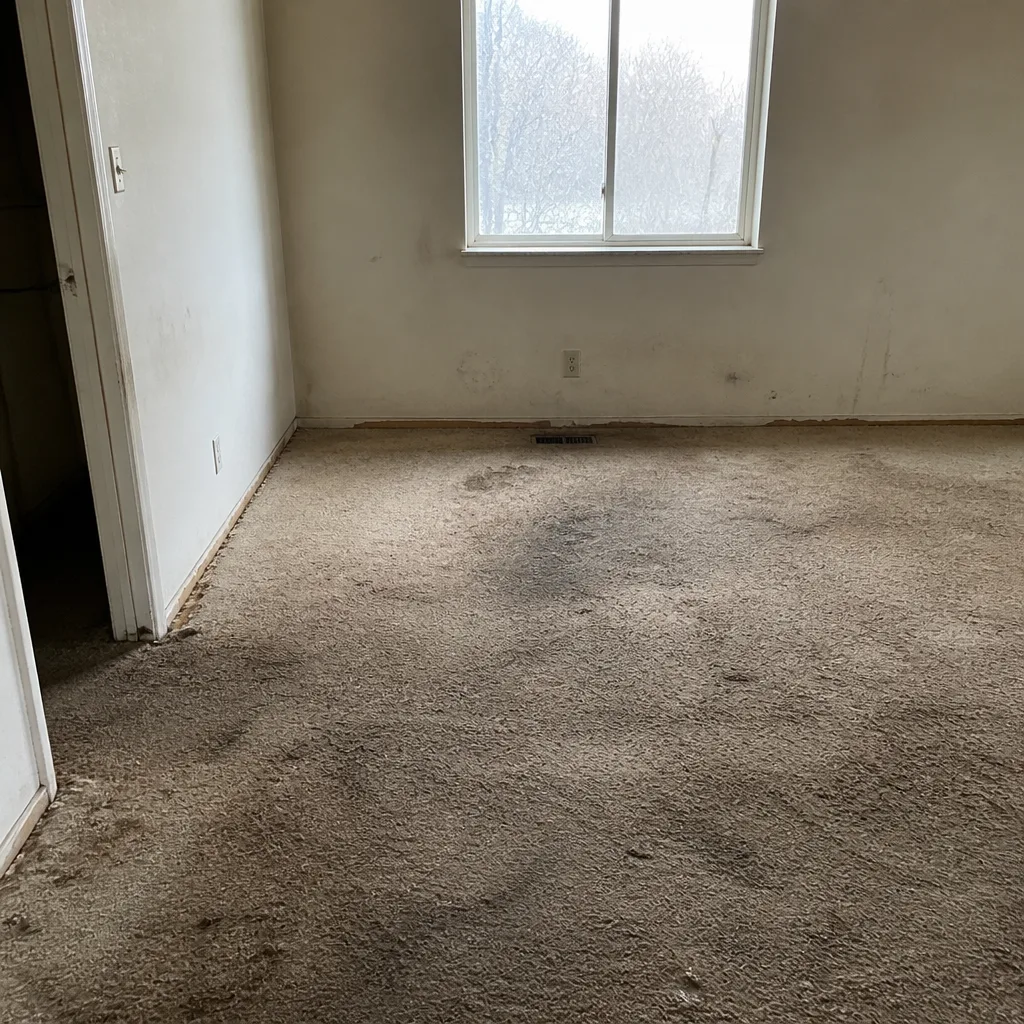 Before
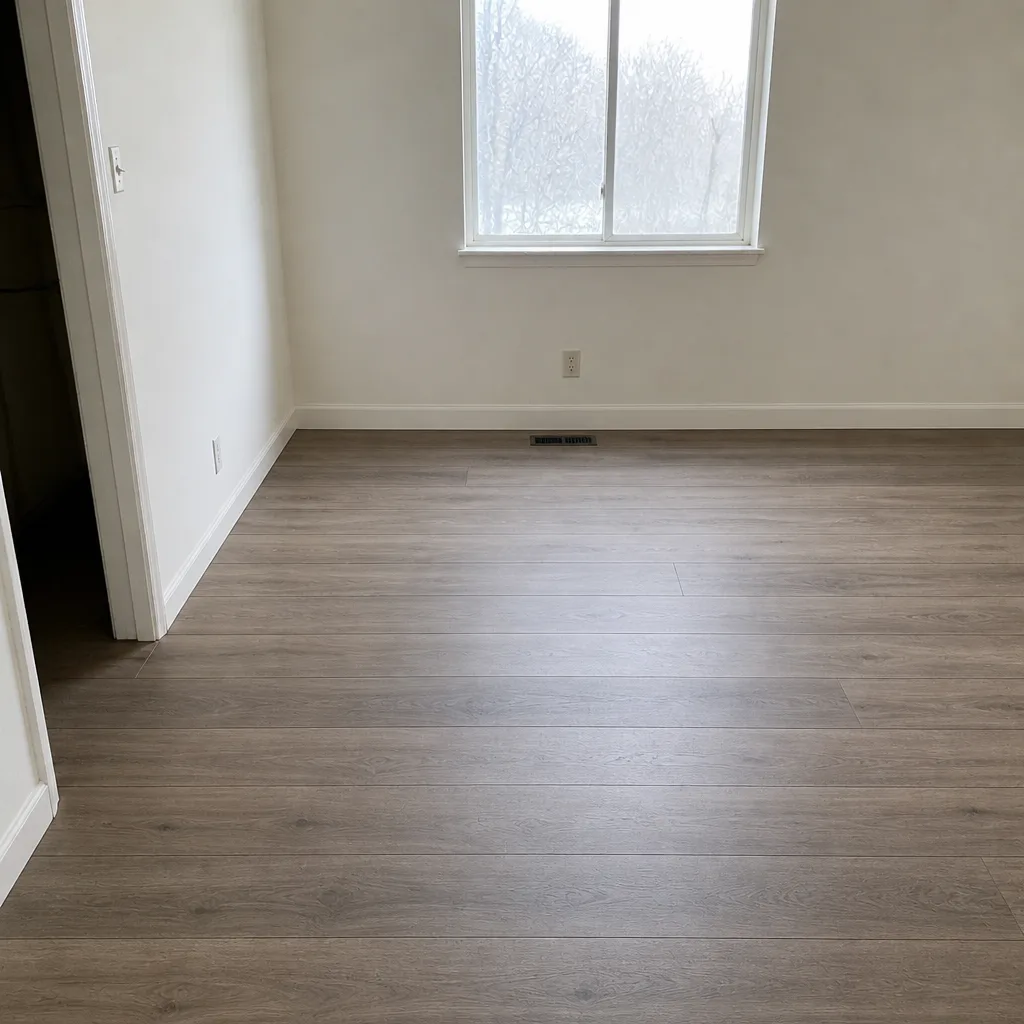 After
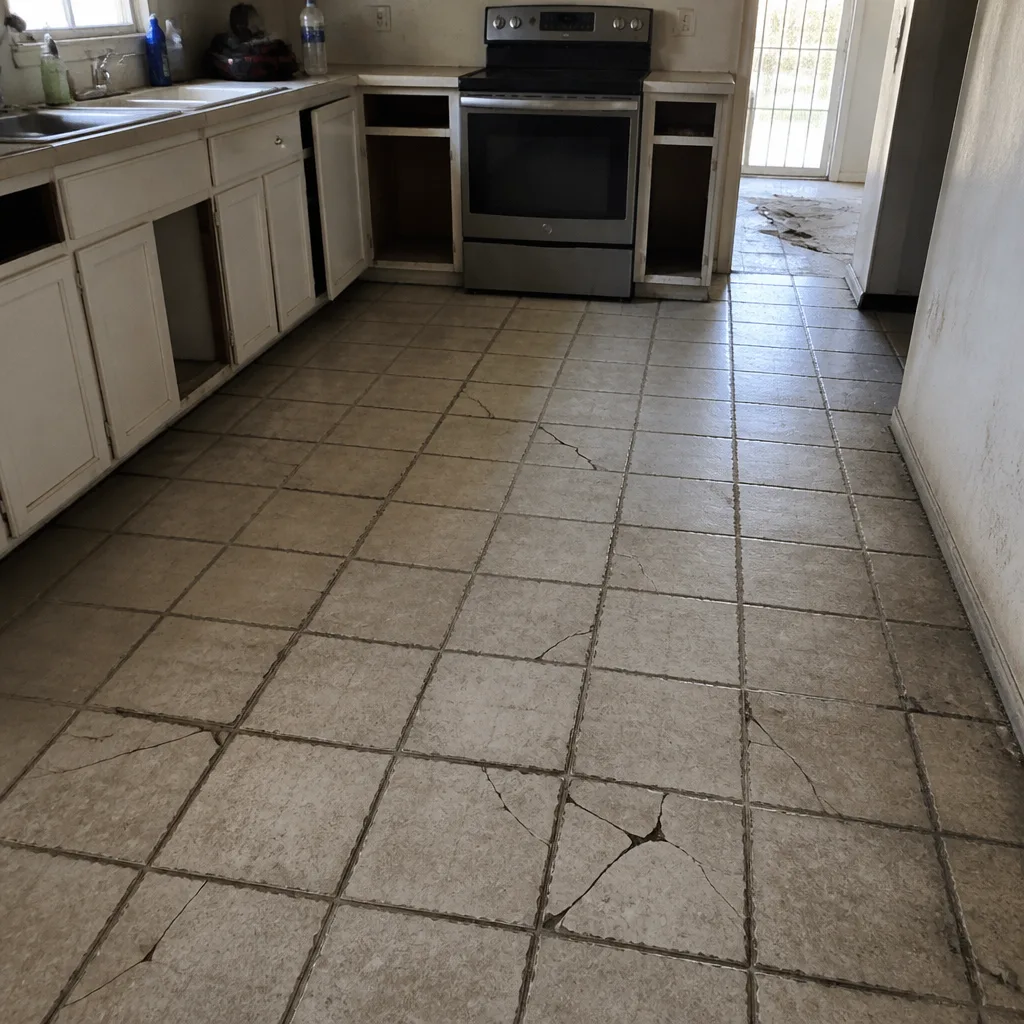 Before
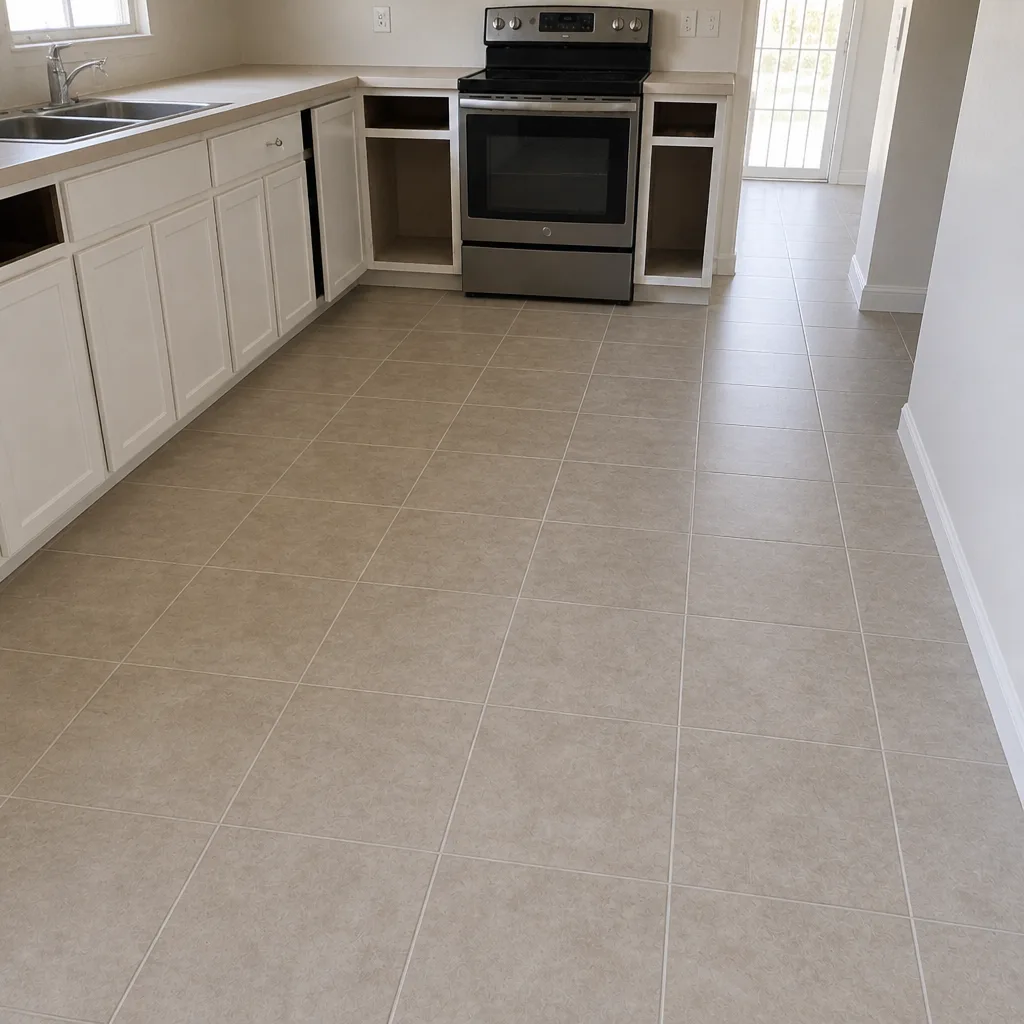 After
When to Call a Professional
Call a professional when the damage points to a systemic cause, when the floor is hardwood and you don’t know whether it can be sanded again, when the match is uncertain, or when you’re not sure which choice is right. Those are the decisions that shift by thousands of dollars, and they’re the ones worth having an expert look at before you buy anything.
Flooring Whitney offers free estimates in Whitney – call (833) 734-5603. We answer 24/7. Fast dispatch from 7am to 7pm, Sunday through Friday. Written estimates come with the visit, and the written estimate sets the final price. Scope covers carpet, tile, and hardwood refinishing, with nine brands (Shaw, Mohawk, COREtec, Pergo, LifeProof, Mannington, Armstrong, Daltile, and Karndean) so an existing-floor match is a real possibility, not a hope.
Frequently Asked Questions
Look at the pattern. Damage confined to one spot with an obvious cause (a spill, a dropped object, one pet accident) is usually isolated, while damage that repeats across a room, follows grout lines, or keeps returning after repair points to a systemic cause like subfloor moisture, failed adhesive, or settlement. If you can’t confidently name the cause, that’s a sign to have it looked at before pricing the repair – and in Whitney you can call (833) 734-5603 for a free estimate.
It depends on how much wood remains above the tongue and the overall condition of the boards. A floor that has enough material left can usually be sanded and refinished, which is the best-value option in most hardwood homes. A floor that has been sanded too many times, or has soft spots and joint lines showing through, may need boards replaced or a full floor installed. The check has to happen at the estimate visit – no one can promise it from a photo.
When a repair quote approaches about 40-60% of what a full replacement would cost, replacement typically delivers better long-term value, especially if the current floor is near the end of its service life. Below that range, repair is often the better call, provided the cause is fixed. The only reliable number is the one in a written estimate, so get both sides priced before deciding.
Three reasons: dye lots and shade variation from one production run to the next, discontinued product lines that are no longer made, and finish sheen mismatch between an older floor and new material. That’s why many repairs end up as a partial replacement – new material goes in a low-visibility area (closet, behind furniture) and the removed flooring is used to patch the visible damage.
No. On a small, isolated problem in a floor with years of life left, repair is almost always cheaper and smarter. But on a floor with an unfixed moisture source, failed adhesive, or widespread settlement, a repair is a temporary patch and replacement will be the lower total cost once the second repair is included. Compare the two in writing, not by guesswork.
Our core services are carpet installation, tile flooring installation, and hardwood floor refinishing – and refinishing in particular is often the answer when the question is “fix or replace” on hardwood. For repairs, the free estimate visit determines what’s needed and whether a targeted fix, a partial install, or a full replacement is the right call. Call (833) 734-5603 to schedule yours. Estimates are free and the price is set per job by the written estimate.
The Bottom Line
Fix it or start over comes down to three things: whether the damage is isolated or systemic, whether the floor has usable life left, and whether a repair will outlast the floor around it. Isolated damage on a floor with years left is usually a clear repair. Systemic damage – subfloor moisture, failed adhesive, settlement – makes patching a short-term fix on a long-term problem, and once a repair quote approaches 40-60% of replacement, a new floor usually wins on total cost. Slow down on the diagnosis, price both options in writing, and the right answer is usually obvious before the first board moves.
Call (833) 734-5603 for a free estimate in Whitney. We answer 24/7. Fast dispatch from 7am to 7pm, Sunday through Friday.
Written by the team at Flooring Whitney.