
Last updated November 17, 2026
 Hardwood
 Engineered hardwood
 Luxury vinyl plank
 Laminate
 Porcelain tile
 Carpet
 Shaw
 Mohawk
 COREtec
 Pergo
Free in-home measure and written estimate: Shaw, Mohawk, COREtec and Pergo lines compared on your own rooms, with carpet, tile, vinyl plank, laminate and hardwood laid out side by side
Get your free estimateHow to Hire a Flooring Contractor in Whitney: A Step-by-Step Guide
Most homeowners hire a flooring contractor the same way they hire a handyman: whoever answers the phone and quotes the lowest number. That’s the wrong filter. A contractor who lists flooring alongside drywall, painting, and landscaping isn’t a flooring expert, they’re a generalist who occasionally installs floors. The difference shows up months later, when a tile joint cracks or a plank edge lifts. This guide walks through how to screen a flooring contractor in Whitney, what Nevada licensing actually requires, how to read a scope document, and which questions expose whether flooring is someone’s core trade or a side job.
Quick Answer
To hire a flooring contractor in Whitney, verify the contractor holds a valid Nevada State Contractors Board license for flooring work, confirm the scope and materials in a written document, ask whether flooring is their primary trade, and get manufacturer and labor warranty terms in writing before signing. The right hire is a flooring specialist, not a generalist who happens to own a truck and a chop saw.
Styles & brands we work with
- Hardwood
- Engineered hardwood
- Luxury vinyl plank
- Laminate
- Porcelain tile
- Carpet
- Shaw
- Mohawk
- COREtec
- Pergo
Table of Contents
- Why a Flooring Specialist Beats a Generalist
- Nevada Licensing: What to Verify Before You Sign
- The Questions That Reveal a Core Trade
- What a Real Walkthrough and Scope Document Look Like
- Why Three Bids Aren’t Always Better Than One
- Evaluating Warranties – and What Voids Them
- Refinish Before You Replace
- Whitney-Specific Considerations
Why a Flooring Specialist Beats a Generalist in Whitney
A generalist contractor takes flooring work because it’s available, not because it’s their craft. That distinction matters more in flooring than in almost any other trade, because floors fail slowly and quietly. A bad paint job shows up immediately. A bad floor install might look fine for a season before the problems surface at the seams.
Specialists spend every working day on moisture readings, subfloor prep, expansion gaps, and transitions between rooms. They know how a product behaves in Whitney’s dry climate, how seasonal humidity swings affect different materials, and how to sequence an install so the finished surface stays flat and tight. A generalist juggling five trades learns flooring on your project.
At Flooring Whitney, our entire operation is built around three services: carpet installation, tile flooring installation, and hardwood floor refinishing. That focus means every measurement, product recommendation, and install step is handled by people who work on floors every day rather than rotating generalist crews.
When you interview contractors, ask directly: “What percentage of your annual work is flooring?” A specialist answers without hesitation. A generalist hedges, then changes the subject to their versatility. That hedge is your answer.
Nevada Licensing: What to Verify Before You Sign
Nevada requires contractors to hold a license from the Nevada State Contractors Board before performing most construction and remodeling work, including flooring installation above a certain threshold. Hiring an unlicensed contractor leaves you with little recourse if the work goes wrong, and it can complicate insurance claims and resale.
Verification takes about ten minutes and should happen before you sign anything, not after. Here’s the order we recommend:
- Ask the contractor for their Nevada State Contractors Board license number in writing.
- Look up that number on the Board’s public license search to confirm it’s active and current.
- Confirm the license classification covers the scope of your project. Flooring typically falls under a general or specific classification, so ask what theirs covers.
- Ask for a certificate of insurance showing both general liability and workers’ compensation coverage, and call the insurer to confirm it’s active.
- Check that the name on the license, the name on the estimate, and the name on the insurance certificate all match.
If any of those three names diverge, slow down and ask why. A subcontracting arrangement isn’t automatically a problem, but you deserve to know who’s actually responsible for the work and who’s insured for it.
Beyond the license, ask whether the contractor carries general liability and workers’ comp. If a worker is injured on your property and the contractor has no workers’ comp coverage, the exposure can land on you. Confirm coverage directly with the insurer rather than accepting a photocopy at face value.
The Questions That Reveal a Core Trade
You can learn more about a contractor from five questions than from an hour of sales talk. The answers reveal whether flooring is genuinely their trade or a line item on a longer menu.
- “Which flooring brands do you install regularly?” A specialist names specific brands and knows the differences between them. Flooring Whitney works with nine brands, including Mohawk and COREtec, and can speak to which product fits a given room and lifestyle.
- “How do you handle subfloor prep?” Vague answers here are a red flag. Prep is where most floor failures begin, and a contractor who skips or rushes it is building in a future problem.
- “What’s your process for moisture testing?” Even in dry Whitney, concrete slabs and crawl spaces can carry moisture that ruins certain floors. A pro tests before installing.
- “Who installs the floor – your own people or a rotating sub?” A flooring-focused company can describe the crew and the sequence. A generalist often can’t.
- “Can you show me a written scope for a similar job?” Anyone serious has a template. Anyone winging it says they’ll “work it out on site.”
Listen for specificity. “We use Mohawk and COREtec most often for high-traffic rooms” tells you something. “We use the best materials” tells you nothing. The same goes for scheduling: a specialist can describe how they sequence a job, how long rooms stay off-limits, and how they protect adjacent spaces.
What a Real Walkthrough and Scope Document Look Like
The walkthrough is where a legitimate contractor separates from a napkin estimator. A proper walkthrough takes time, involves measurements and photographs, and ends with a written document you can compare against other bids. A napkin estimate is a number on the back of a business card and a handshake.
Here’s what a real walkthrough includes:
- Room-by-room measurement. Not just square footage – layout, doorways, transitions, and any irregular shapes that affect material waste.
- Subfloor inspection. Checking for level, movement, moisture, and any existing damage that needs repair before new flooring goes down.
- Discussion of material options. Brand, product line, and why one suits your room better than another. This is where a specialist’s knowledge shows.
- Written scope. A document that lists demolition, prep, materials, installation, trim work, transitions, and cleanup line by line.
- Line-item pricing. Not one lump sum. You should see what the material costs, what the labor costs, and what the prep costs, so you can compare bids fairly.
- Timeline and schedule. When work starts, roughly how long it takes, and how rooms will be sequenced.
A scope document that says “install flooring” and nothing else is not a scope. It’s a hope. The written estimate is what sets the final price, so everything discussed verbally should appear in that document before you sign.
Why Three Bids Aren’t Always Better Than One
The standard advice is to get three bids and pick the middle one. That advice assumes all three bids describe the same work. In flooring, they rarely do.
The lowest bidder is usually cutting scope. They’re skipping subfloor prep, using thinner underlayment, quoting a lower-grade product line, or leaving trim and transitions for you to handle later. When you compare that bid to a thorough one, you’re not comparing prices. You’re comparing two different jobs.
A better approach:
- Get two or three bids, but ask each contractor to itemize the same line items so you can compare apples to apples.
- Ask each bidder to break out material, labor, prep, and disposal separately.
- If one bid is dramatically lower, ask the contractor what they’re excluding. It won’t be a secret for long.
- Weigh the scope match more heavily than the final number.
In Whitney, where slab-on-grade construction is common, subfloor prep matters especially. A bid that leaves prep off the line items is either assuming you won’t notice or planning to hit you with a change order once the floor is torn up. Ask about prep explicitly before you compare prices.
Evaluating Warranties – and What Voids Them
Two warranties matter on a flooring job: the manufacturer’s warranty on the material and the labor warranty from the installer. They cover different things, they have different terms, and both are easy to void without realizing it.
Manufacturer warranties typically cover product defects – delamination, abnormal wear, and similar issues – but almost always require proper installation and maintenance. A manufacturer can deny a claim if the floor was installed over a wet subfloor, in a room the product wasn’t rated for, or with cleaning products the manufacturer prohibits.
Labor warranties cover the installer’s workmanship, not the material. These vary widely and typically describe what the contractor will fix and for how long. Ask for the terms in writing, not just the verbal promise.
Common things that void warranties:
- Installing in a room the product isn’t rated for (bathrooms, laundry rooms, sunrooms)
- Skipping or shortcutting subfloor prep
- Using the wrong underlayment
- Cleaning products the manufacturer doesn’t approve
- Failure to document moisture conditions during install
Ask the contractor to walk you through both warranties before you sign. A specialist will know exactly which products carry which terms and will make sure the install respects them. A generalist often can’t tell you what voids the warranty because they never checked.
Refinish Before You Replace: The Question Most Contractors Skip
If you have existing hardwood floors, the first question to ask any flooring contractor is whether they can refinish rather than replace. Most pure-installation shops don’t promote refinishing because it’s a different skill set and often lower margin. We think it should be the first conversation, because refinishing costs less than a full replacement and keeps the original floor in place.
Refinishing isn’t always an option. It depends on the thickness of the wood and its condition, which is something a contractor needs to check at the estimate visit. If the wear layer has already been sanded too thin, refinishing isn’t viable. If the boards are solid and the existing finish is worn, refinishing is often the smarter path.
Flooring Whitney includes hardwood floor refinishing as one of our three core services, alongside tile flooring installation and carpet. That means we can give you an honest answer on whether to restore or replace, rather than steering you toward the service on our menu. Ask every contractor you interview whether they refinish, and if they don’t, ask why. The answer will tell you a lot about their scope.
Refinishing also avoids the disruption of a full removal and install, and it keeps the material that’s already in your home rather than sending it to a landfill. For homeowners in older Whitney properties with original hardwood, that’s often the better call both financially and practically.
Whitney-Specific Considerations for Your Flooring Project
Whitney’s desert climate affects flooring decisions in ways that coastal or humid-climate guides won’t tell you. Very low humidity for much of the year, combined with seasonal swings, can cause wood floors to shrink and gaps to open at the seams if the material wasn’t properly acclimated before installation. That’s a prep issue, and it’s one reason subfloor and acclimation practices matter here.
Slab-on-grade construction is common in Whitney and the surrounding area. Slabs can wick moisture from below even in a dry climate, which is a problem for moisture-sensitive flooring. A contractor who skips moisture testing on a slab is gambling with your floor and your warranty.
Throughout Whitney, we see a wide range of housing, from older builds with original hardwood to newer construction with modern flooring preferences. That variety matters when you’re choosing products. Water-resistant lines like LifeProof and COREtec make sense in high-traffic and moisture-prone rooms, while hardwood refinishing makes sense for homes with existing solid wood floors worth saving.
Finally, verify the contractor is licensed for Nevada work specifically, not just generally. A license that’s valid elsewhere doesn’t automatically qualify a contractor to work in Whitney, and the Nevada State Contractors Board is the authority that matters here.
Common Mistakes to Avoid
- Hiring a generalist who “also does floors.” A contractor who lists flooring alongside five other trades isn’t a flooring specialist. Look for someone who does floors every week, not twice a year.
- Skipping license verification. In Nevada, verify the contractor’s license with the State Contractors Board before signing. A verbal assurance isn’t enough.
- Accepting a napkin estimate. A number on a business card isn’t a scope. Insist on a written document with line items for materials, labor, and prep.
- Picking the lowest bid without asking why. In Whitney, the lowest bid often means skipped subfloor prep, which is a problem that surfaces after the floor is installed.
- Forgetting to ask about refinishing. If you have existing hardwood, ask whether it can be refinished before you accept a replacement quote. Most installation-only shops won’t mention it.
- Not reading the warranty terms. Both the manufacturer and the labor warranty have conditions. Skipping a moisture test or using the wrong cleaning product can void both.
- Assuming acclimation isn’t necessary in the desert. Whitney’s humidity swings can affect wood flooring. Ask how the contractor handles acclimation before install.
See the difference
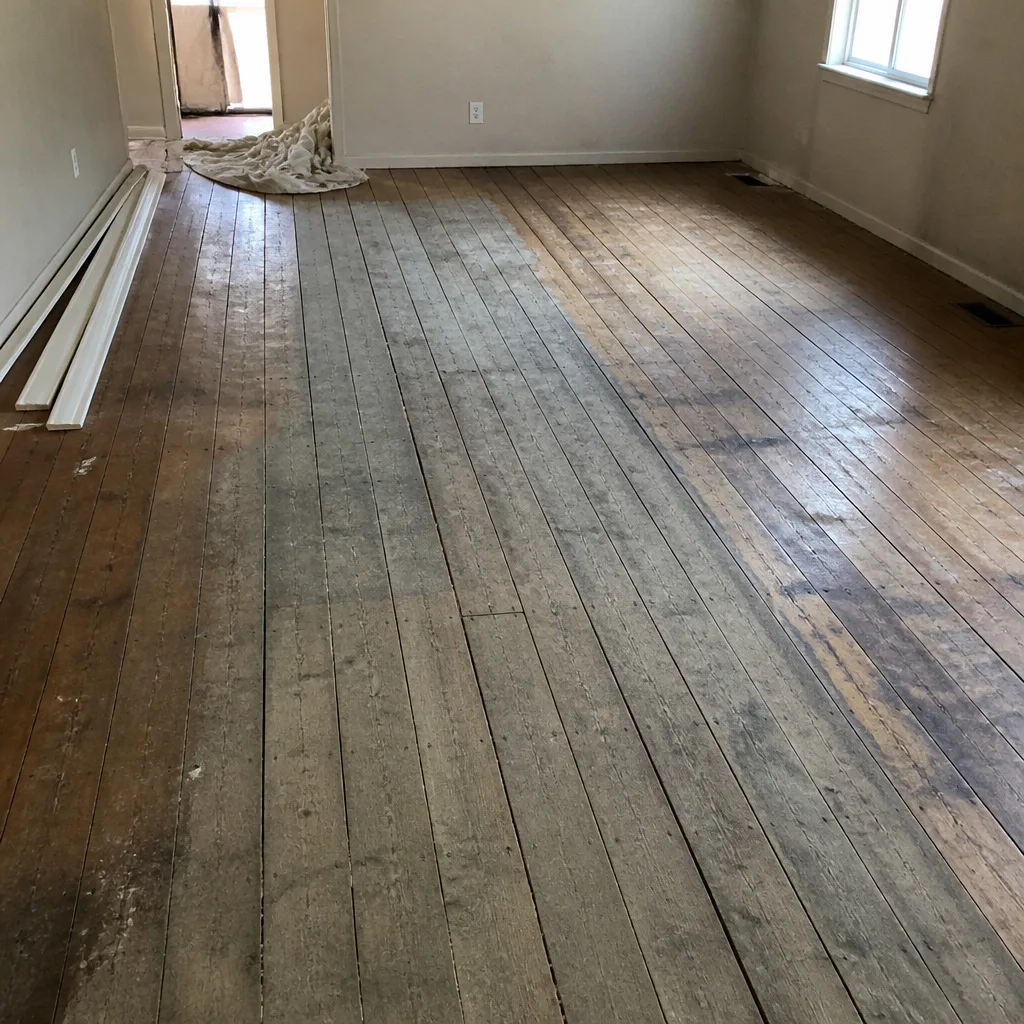 Before
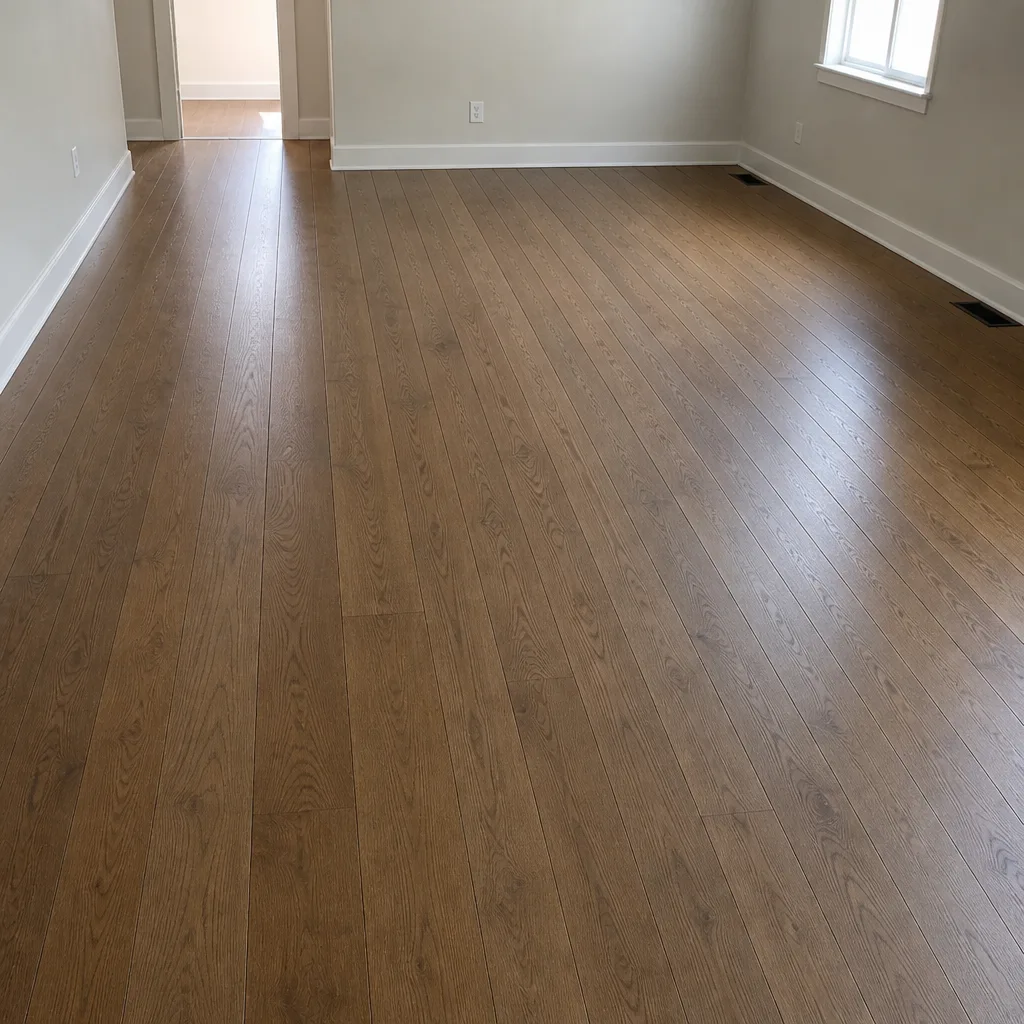 After
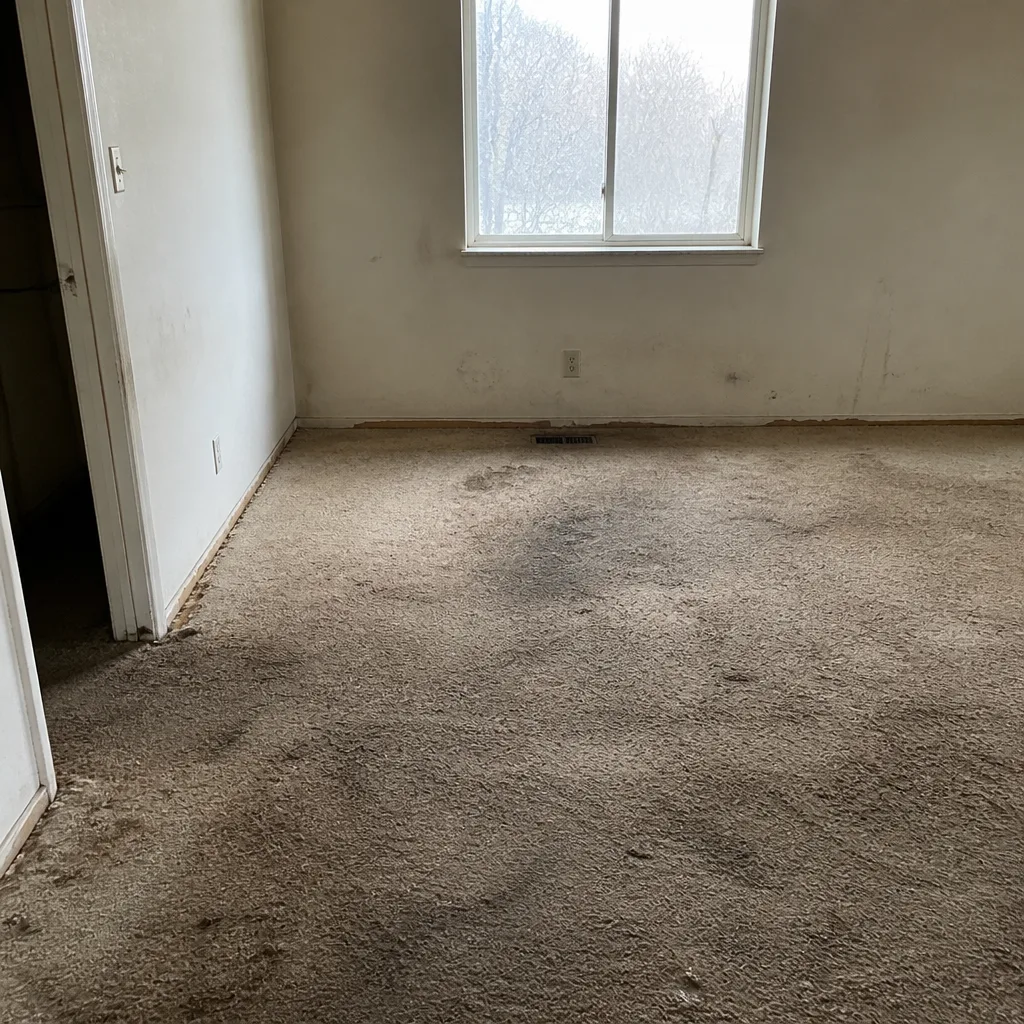 Before
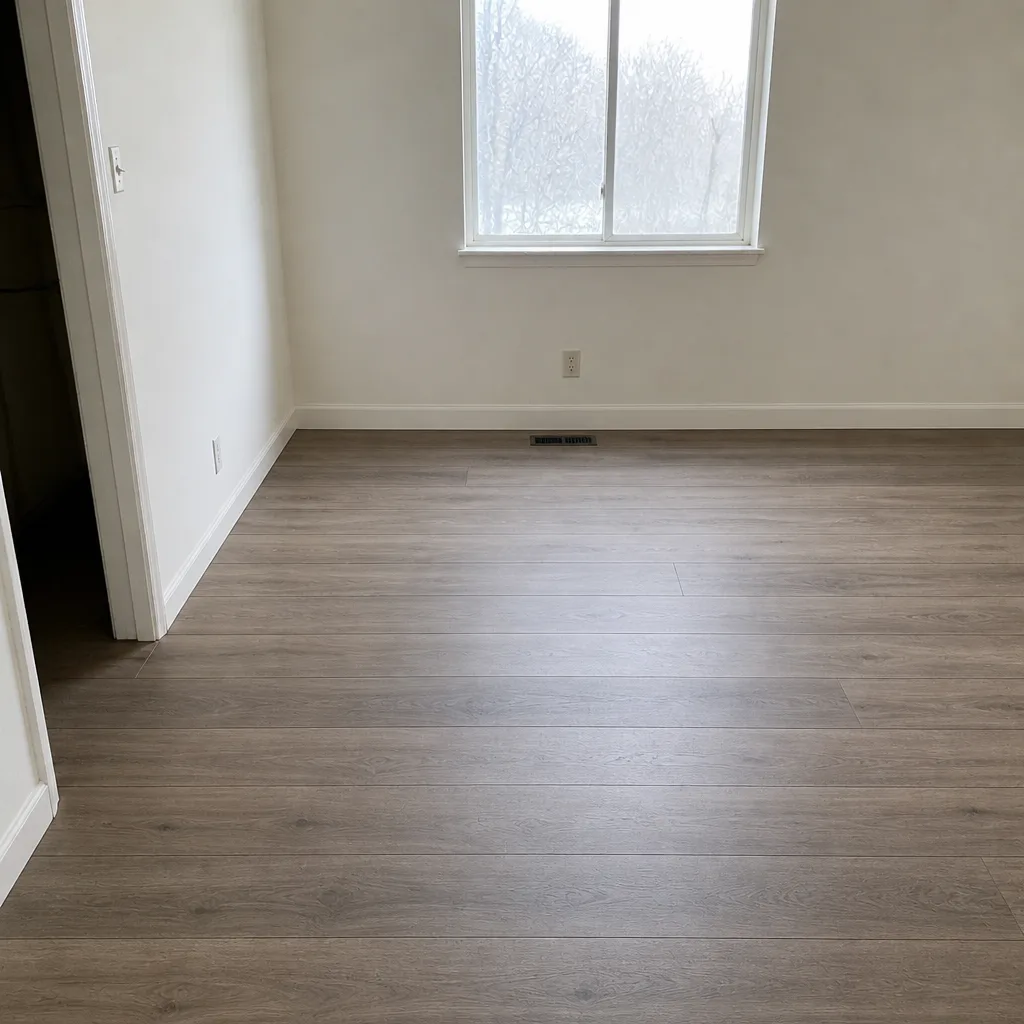 After
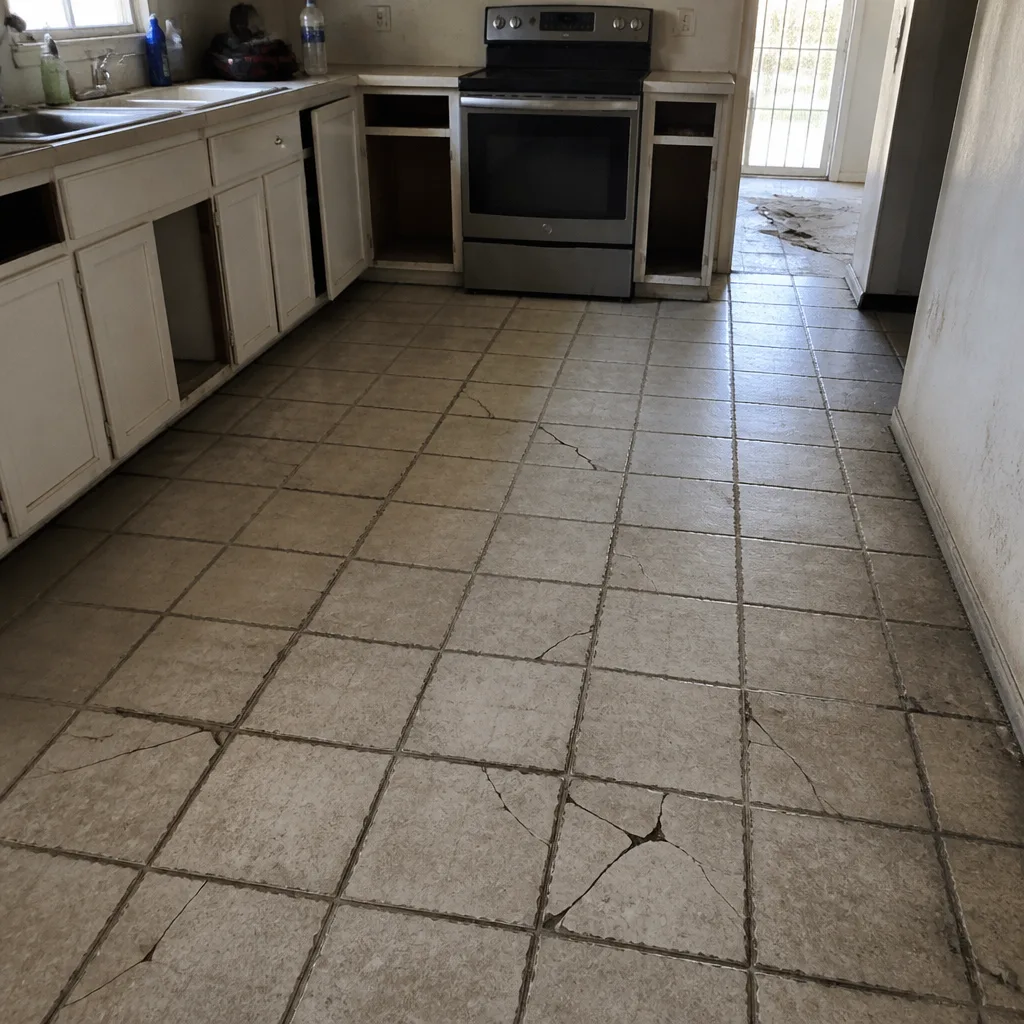 Before
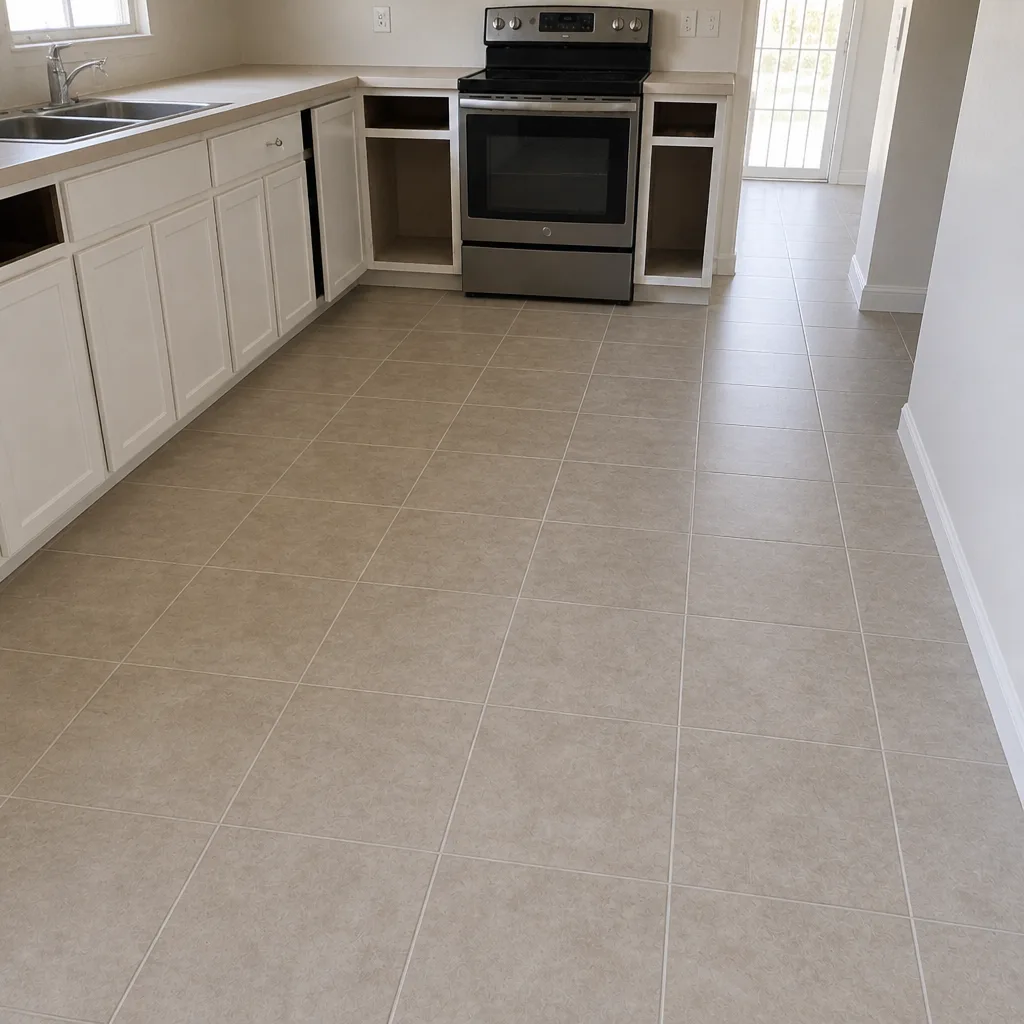 After
When to Call a Professional
Some flooring problems are cosmetic. Others need a licensed contractor. Call a professional if you see movement or buckling in your floor, if water has soaked into the subfloor, if your hardwood has worn through the finish into the wood, or if you’re planning a full replacement and need accurate measurements and a written scope. Tile that’s cracked, loosened, or showing hollow sounds beneath it should also be evaluated by a professional before it spreads or causes water damage underneath.
If you’re planning a project and want a straight answer on whether your existing floor can be refinished rather than replaced, that conversation is worth having before you commit to anything. Flooring Whitney offers free estimates in Whitney – call (833) 734-5603. We answer 24/7. Fast dispatch from 7am to 7pm, Sunday through Friday.
Frequently Asked Questions
Ask for the contractor’s Nevada State Contractors Board license number in writing, then look it up on the Board’s public license search to confirm it’s active and covers the scope of your project. Also confirm that the name on the license, the estimate, and the insurance certificate all match. Call (833) 734-5603 for a free estimate from a licensed contractor.
Hire a flooring specialist for flooring work. A generalist who handles multiple trades learns flooring on your project, while a specialist works on floors every day and knows the prep, moisture, and acclimation details that prevent early failures. Flooring Whitney focuses on flooring only – call (833) 734-5603 for a free estimate.
Refinishing is often better than replacement when the wood is thick enough and the boards are in good condition, because it costs less and keeps the original floor in place. Whether it’s viable depends on the wood’s thickness and condition, which a contractor checks at the estimate visit. Call (833) 734-5603 to schedule a free estimate.
A proper scope document breaks out demolition, subfloor prep, materials, installation, trim work, transitions, and cleanup as separate line items, with pricing for each. If the document just says “install flooring” without those details, ask for a revision before you sign anything. Call (833) 734-5603 for a free written estimate.
The lowest bid is usually cutting scope, such as skipping subfloor prep, using lower-grade materials, or leaving trim and transitions out. Compare line items across bids rather than comparing just the totals. Call (833) 734-5603 for a free estimate with line-item pricing.
Yes. Whitney’s dry climate and seasonal humidity swings can affect wood flooring if it isn’t properly acclimated, and slab-on-grade construction means moisture testing matters before any install. A licensed flooring contractor should address both at the estimate. Call (833) 734-5603 for a free estimate.
The Bottom Line
Hiring a flooring contractor in Whitney comes down to four checks: verify the Nevada State Contractors Board license, confirm the walkthrough produces a written scope with line items, ask whether flooring is genuinely the contractor’s core trade, and read both the manufacturer and labor warranty terms before you sign. Price matters, but scope match matters more. The lowest bid is often the one that skipped prep, and prep is where floors succeed or fail. If you’re ready to get a free, itemized estimate, Flooring Whitney is here to help.
Call (833) 734-5603 for a free estimate. We answer 24/7. Fast dispatch from 7am to 7pm, Sunday through Friday.
Written by the team at Flooring Whitney.